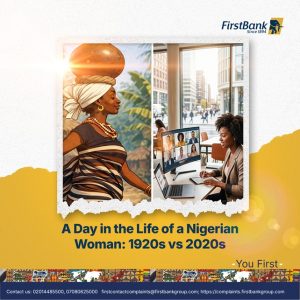

The rooster crows before the sun rises.
In the 1920s, Ada, twenty years old, is awakened by the loud crowing. She stretches, feeling the stiffness of sleep in her muscles, slips on her simple cloth wrapper, and steps barefoot onto the cool, dew-covered ground.
In the 2020s, Ada wakes to the buzzing of her smartphone alarm. She hits snooze twice, groaning, and sits up, blinking at the soft glow of the screen. Through the window, the city hums awake car horns and the busy rumble of Lagos.
In the 1920s, Ada heads to the stream, balancing a clay pot on her head. The path is rough and scattered with stones. Halfway there, a sharp one pricks her leg. She winces, pressing her foot to stop the sting, but keeps walking, mindful of the long day ahead and the chores waiting at home.
In the 2020s, Ada laces her shoes after dressing quickly in a crisp blouse and flared trousers. She grabs her bag and steps out; the street is already alive with drivers and commuters.
By early morning in the 1920s, Ada returns to her hut. Smoke curls from the firewood stove as she boils yam for her husband in his obi. The aroma is earthy and comforting, filling the small hut. Her daughter stirs quietly, sleepy-eyed.
In the 2020s, breakfast will have to wait; Ada doesn’t want to miss the bus. She stops at a food vendor on the road. No cash today, but it doesn’t matter. With a quick tap on her FirstMobile app, the payment goes through instantly. She grabs bread and akara, the warm smell of fresh bread cutting through the city’s dust. She takes a few bites while checking messages on her phone.
After serving her husband and eating, Ada steps toward the busy market of the 1920s village. With the New Yam Festival approaching, she must buy fresh sets of fabric for her household. The morning sun climbs slowly into the sky, warming the dusty path beneath her feet as she walks. At the market, voices rise from every corner as traders call out their wares. Ada moves from stall to stall, carefully negotiating with the sellers. Finally, satisfied with her choices, she pays five cowries and gathers the folded fabrics before making her way home.
Meanwhile, 2020s Ada sits at her desk, her laptop glowing in front of her. She wears a neat blazer over her blouse, hair tied back. Her tasks are the same as her male colleague’s: delivering to her performance indices and business processes.
By afternoon, 1920s Ada returns from the farm, arms heavy with baskets. She begins preparing lunch: grinding cassava, stirring soups, tending the fire.
At the same time, 2020s Ada is in a meeting room, her voice is clear and confident, and contributing intelligent insights. She smiles inwardly when a colleague nods in agreement.
By evening, 1920s Ada wipes the mud walls of her house. The sky is streaked gold and crimson. Her body aches, but she works with care, ensuring everything is ready for dinner.
In contrast, 2020s Ada jostles on the crowded bus, clutching her bag. Around her, commuters were frustrated and tired after a long day. She thinks of the takeout she’ll order once she gets home, longing for the quiet of her apartment.
Night settles. In the 1920s, Ada serves her husband dinner. He notices the cut on her leg from the stream and gently tends to it. They eat quietly, sharing a tender glance; the hut dimly lit by a single lamp, the smoke curling lazily above them. Later, they lie downside by side as sleep slowly carries them away.
At the same time in the 2020s, Ada arrives home exhausted. She orders takeout, slips into her pajamas, and pours herself a glass of juice. The hum of her apartment, the blinking city lights, and the glow of her TV create a cocoon of comfort. She tries to watch a movie but is stopped when her subscription expires. She logs into her Lit app and renews it effortlessly. Soon after, she watches TV, sipping slowly, letting the day dissolve before sleep finally arrives.
Whether in the 1920s or the 2020s, Ada’s day shows the strength of Nigerian women. From tending the home and land to shaping workplaces, women have carried responsibility with grace. We honour the tireless effort and courage of women everywhere—their dreams and their enduring power to shape the world.